
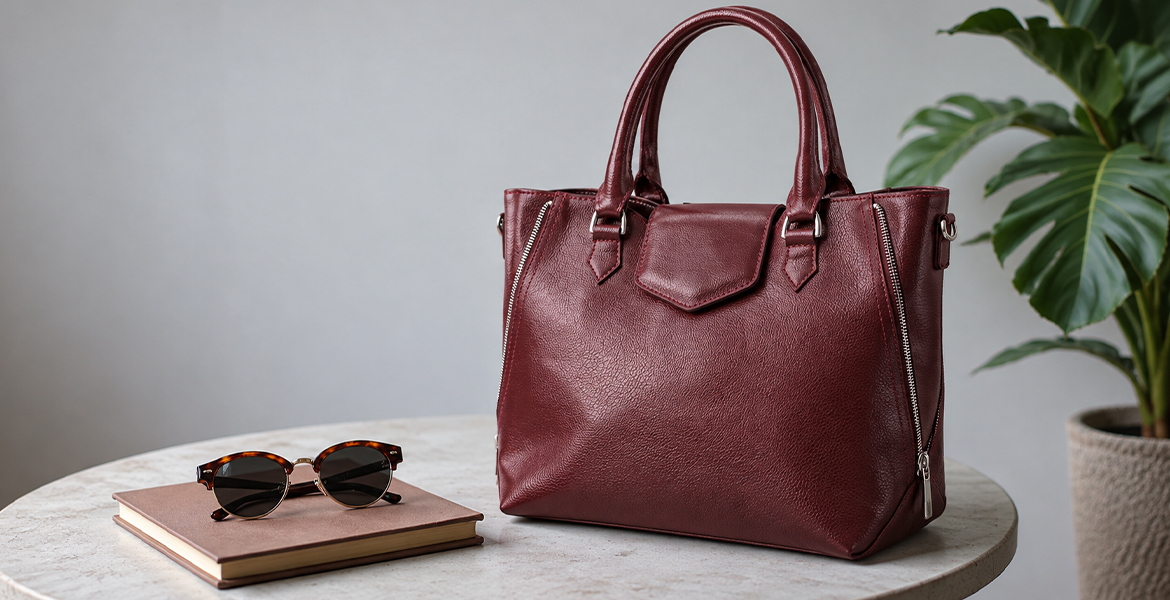
The shopping advice in the case of a majority of handbags focuses on what you can put inside it. However, there’s another revealing question that you may ask! “What is the handbag like when there’s absolutely nothing inside?” An empty bag exposes characteristics that a thoughtfully arranged product photograph and stuffed displays can disguise.
Natural shape, starting weight, structure, opening, lining, hardware, and tendency to collapse of a handbag becomes much easier to judge this way. This is known as the empty-bag test. This is a simple way to examine a handbag before imagining it packed with your belongings.
Whether shopping in person or online, the principle can help you evaluate what you are actually buying.
What Is the Empty-Bag Test?
In an empty-bag test, a handbag is evaluated before its contents influence its shape, weight, or even behavior. In the case of a physical shop, this generally means removing any paper, padding, inserts, or display material wherever permitted. This is beneficial in examining how a bag naturally sits. If you’re shopping online, it generally involves looking for photographs or product information, which reveal the bag without artificial shaping.
So, what’s the need here? The simple answer here is filling a handbag changes it. With contents, corners get pushed out, soft panels are supported, flatter base is created, opening is stretched, and how the bag weighs on its own is disguised. With display stuffing, a soft bag can look surprisingly structured. The empty-bag test strips away all these illusions.
1. Start With the Natural Shape
A handbag that’s photographed for sale is often presented in a highly flattering form. Thus, how it normally behaves during everyday use is not necessarily shown in this case. Much of its intended silhouette is generally retained by an empty structured handbag. A deliberately soft bag may naturally fold, slouch, or collapse.
Neither behavior is automatically a problem. What matters is whether it matches your expectations. If you want a crisp silhouette that remains defined when lightly packed, look into how much structure exists without contents. If you enjoy relaxed shapes, some natural collapse may be exactly what you want. Judge the bag you will carry, not merely the shape created for the photograph.
2. Check Its Starting Weight
One of the easiest handbag characteristics to underestimate is the weight of the handbag. A bag might feel manageable when empty but become uncomfortable after adding a phone, wallet, keys, cosmetics, charger, water bottle, and other everyday items. That makes the empty weight important.
Materials, thick handles, reinforced panels, chains, buckles, decorative elements, and substantial hardware can all increase starting weight.
If weight information is provided online, compare it with bags you already use. If shopping physically, hold the empty bag for more than a few seconds. Imagine carrying it after adding your usual belongings. An attractive bag becomes less appealing when carrying it starts feeling like an unexpected arm workout.
3. Examine the Base
The bottom of a handbag reveals plenty about how it may behave.
Place an empty bag on a flat surface where possible. Does it stand independently? Does it tip? Does the base fold inward? Does the entire bag slump sideways?
Again, there is no universally correct answer.
A structured work-style bag may benefit from a stable base, particularly if you frequently place it on tables or other surfaces. A soft shoulder bag may be designed to collapse naturally.
Also examine whether the base has reinforcement or protective feet where relevant.
The important question is whether its behavior suits the way you intend to use it.
4. Look Closely at the Opening
A handbag can have generous dimensions while still being frustrating to use because of a narrow or awkward opening.
Test the opening while the bag is empty.
Does a zipper restrict access? Does a stiff upper edge make reaching inside difficult? Does the opening spread widely enough to see the contents? Does a flap need to be held out of the way?
Online shoppers should compare photographs showing the bag open and closed whenever available.
Dimensions tell you how much theoretical space exists. The opening determines how easily you can actually use that space.
A roomy interior loses some of its convenience when accessing it requires a miniature wrestling match.
5. See What the Lining Does
The lining rarely receives glamorous photographs, but it deserves attention.
When the bag is empty, examine whether the lining sits neatly against the interior or moves loosely. Look at pockets, seams, dividers, and attachment points.
A light-colored lining can make small belongings easier to locate, while darker interiors may visually conceal marks. Patterned linings add another design element but can sometimes make tiny objects less immediately visible.
Also consider the lining material and any available upkeep information.
The outside attracts you to the handbag. The inside is where you repeatedly interact with it.
6. Test the Handles Without Added Weight
Handles and straps behave differently once a handbag is loaded.
Start by examining them empty.
Do handles remain upright or fall naturally? Are attachment points flexible or rigid? Does a chain strap twist? Does a shoulder strap sit flat?
If the strap is adjustable, inspect the available length settings. If it is removable, consider how the handbag looks without it.
This also helps reveal whether decorative straps add unnecessary weight or whether multiple carrying options actually increase usefulness.
A strap should make carrying easier, not become a puzzle attached to the bag.
7. Listen to the Hardware
Hardware is not only visual.
Moving an empty handbag can reveal how chains, rings, zipper pulls, clasps, and buckles behave.
Do components move smoothly? Does a clasp align naturally? Does a zipper travel comfortably around corners? Do decorative elements constantly strike against one another?
Online, you cannot physically perform this test, so detailed product descriptions, close-up photographs, and demonstrations can become useful.
Hardware should also be looked into where it connects with the bag. Attachment points experience repeated movement and deserve as much attention as the decorative finish itself.
8. Check How Easily the Bag Distorts
Gently handling an empty handbag can reveal how readily its shape changes.
Does the body fold immediately? Do side panels cave inward? Does the base twist? Does the opening lose alignment?
Softness is not the same as poor construction. Many handbags are intentionally flexible.
The question is whether the amount of flexibility suits the design you want.
If you expect a bag to maintain an architectural silhouette, excessive collapse may disappoint you. If you want something relaxed that adapts around its contents, rigidity might actually feel inconvenient.
Evaluate structure according to purpose.
9. Imagine the First Five Items
Only after examining the empty bag should you mentally begin filling it.
Start with the five things you carry more often.
Perhaps that is a phone, wallet, keys, sunglasses, and a small pouch.
Where would each item go?
Consider whether pockets are appropriately positioned and whether frequently used belongings would remain accessible. Think about whether one bulky object would consume majority of the interior or distort the exterior shape.
This step connects the empty-bag test with real-life use without immediately becoming a capacity exercise.
You are testing compatibility, not merely volume.
10. Ask Whether You Still Like It Empty
Finally, look at the handbag again with nothing helping it.
Do you still like its silhouette? Does the construction make sense? Is the weight reasonable? Does the opening seem practical? Are the handles and straps appropriate? Does the interior layout work for you?
This question matters because a handbag spends plenty of time partially filled rather than appropriately packed.
A design that only looks appealing when cautiously stuffed may behave very differently during everyday use.
The empty version is the foundation. Everything you place inside simply changes it.
Judge the Bag Before the Contents
The empty-bag test encourages a different kind of handbag shopping.
Instead of immediately asking how much a bag holds, begin by examining what already exists: its weight, structure, base, opening, lining, straps, hardware, and natural silhouette.
Then introduce your belongings into the equation.
This sequence makes it easier to distinguish actual functionality from presentation. It can also reveal whether a handbag fits your habits before excitement takes over.
A handbag should not need strategic stuffing to convince you.
Empty it mentally or physically, examine what remains, and make your decision from there. Sometimes taking everything out of the bag is exactly what helps you see more clearly.